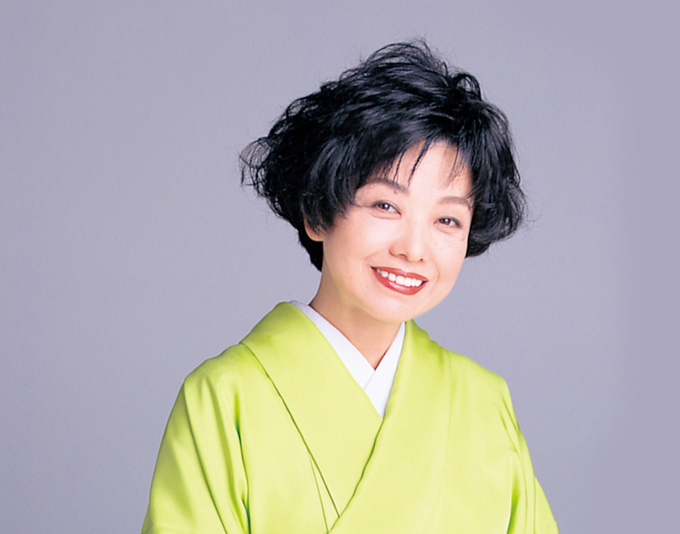
都はるみは本名·北村春美、1948年京都生まれ。芸能好きだった母親の影響で幼い頃から浪曲や民謡、日本舞踊を習ううちに、歌手を目指すようになり、63年、15歳の時に出場した第14回コロムビア全国歌謡コンクールで優勝を果たす。その翌年は五木ひろしが優勝、過去にも島倉千代子、北島三郎ら、スターへの登竜門となる大会だった。そして東京オリンピック開催の年、64年3月にコロムビアから「困るのことヨ」でデビュー。同年10月に出された3枚目のシングル「アンコ椿は恋の花」が初のヒット曲となり、第6回日本レコード大賞·新人賞を受賞した。作曲は都が芸能界の父と慕った恩師·市川昭介で、以降も「涙の連絡船」(65年)や「好きになった人」(68年)などの主要作を手がけてゆく。
“うなり”を効かせた独特の力強い唱法でヒット曲を連ねてトップスターとなった都はるみが名実共に歌謡界の頂点を窮めたのは、75年12月に発売され、翌年にかけて大ヒットした「北の宿から」だ。阿久悠の作詩、小林亜星の作曲による通算68枚目のシングルはミリオンセラーを記録し、第18回日本レコード大賞と第9回日本有線大賞をダブル受賞という史上初の快挙のほか、第7回日本歌謡大賞、第5回FNS歌謡祭·グランプリなど賞レースを総ナメにした。『NHK紅白歌合戦』でも、75年の第26回、76年の第27回と2年連続で歌われ、76年は初の大トリを務めている。紅白のステージへは65年の第16回に「涙の連絡船」で初出場を果たしてから97年の第48回まで、現在までに計29回出場した。
80年代に入ってからも「大阪しぐれ」(80年)や「浪花恋しぐれ」(83年·岡千秋とのデュエット)などヒットを連ねたが、人気も実力も絶頂の84年、紅白歌合戦で涙ながらに「夫婦坂」を歌ったのを最後のステージに一時期歌手を引退。しかし87年には音楽プロデューサーとして活動を再開し、90年には6年ぶりの新曲となる「小樽運河」で歌手としても復活を遂げる。その後もジブリアニメ『おもひでぽろぽろ』の主題歌「愛は花、君はその種子」(91年)、紅白の大トリで歌われた「古都逍遥」(94年)といった傑作が生まれた。2024年にはデビュー60周年を迎えた。
文:鈴木 啓之(アーカイヴァー)
Harumi Miyako Profile
Born Harumi Kitamura in Kyoto in 1948, Harumi Miyako developed a passion for singing under the influence of her mother, a devotee of the performing arts. From a young age, she trained in traditional Japanese arts, including Rokyoku (narrative singing), Minyo (folk songs), and Japanese classical dance. In 1963, at the age of 15, she won the 14th Columbia National Song Contest―a prestigious competition known as a stepping stone to stardom, having produced legendary figures such as Chiyoko Shimakura and Saburo Kitajima (and Hiroshi Itsuki the following year).
In March 1964, the year of the Tokyo Olympics, she made her professional debut with the single "Komaru no Koto yo" through Columbia Records. Her third single, "Anko Tsubaki wa Koi no Hana," released in October of the same year, became her first major hit and earned her the Newcomer Award at the 6th Japan Record Awards. The song was composed by her mentor, Shosuke Ichikawa, whom she revered as her "father in show business." Their partnership went on to produce several masterpieces, including "Namida no Renrakusen" (1965) and "Suki ni Natta Hito" (1968).
Establishing herself as a top star with her unique, powerful vocal style characterized by her signature unari (vocal growling/vibrato), Miyako reached the absolute pinnacle of the Japanese music industry with the 1975 release "Kita no Yado kara." This 68th single, featuring lyrics by Yu Aku and music by Asei Kobayashi, became a million-seller. It achieved the unprecedented feat of winning both the 18th Japan Record Award and the 9th Japan Wired Award, while sweeping other major accolades including the Japan Song Award and the FNS Music Festival Grand Prix. She performed this hit at the NHK Kohaku Uta Gassen for two consecutive years (1975 and 1976), serving as the "O-tori" (the prestigious final act) for the first time in 1976. Since her debut on the Kohaku stage in 1965, she has made a total of 29 appearances. Entering the 1980s, she continued her hit streak with songs like "Osaka Shigure" (1980) and "Naniwa Koi Shigure" (a 1983 duet with Chiaki Oka). However, in 1984, at the peak of her popularity and prowess, she stunned the nation by announcing her retirement, tearfully performing "Meoto-zaka" as her final stage at Kohaku. After a hiatus, she returned to the industry in 1987 as a music producer and made a full comeback as a singer in 1990 with the new single "Otaru Unga." Her later career produced further masterpieces, such as "Ai wa Hana, Kimi wa Sono Tane" (1991), the theme song for the Studio Ghibli film Only Yesterday, and "Koto Shoyo" (1994), which she performed as the grand finale at Kohaku. In 2024, she celebrated the 60th anniversary of her debut.